





EYAL GANTZ / internet maker NYC 40.7128°N AVAILABLE Q4 2026 v2026.1

DIGITAL PRODUCT BUILDER & AI ARCHITECT

EYAL GANTZ

I build entire digital products, end to end.

Eyal Gantz is a Laravel developer and fractional CTO in New York City who designs, builds, and runs custom web applications, e-commerce stores, and AI automation as one senior builder. 22 years in, 100+ products shipped, including founding-team engineering on Spot, acquired by NetApp for $450M.

REVENUE
$150M+
YEARS
22
SHIPPED
100+
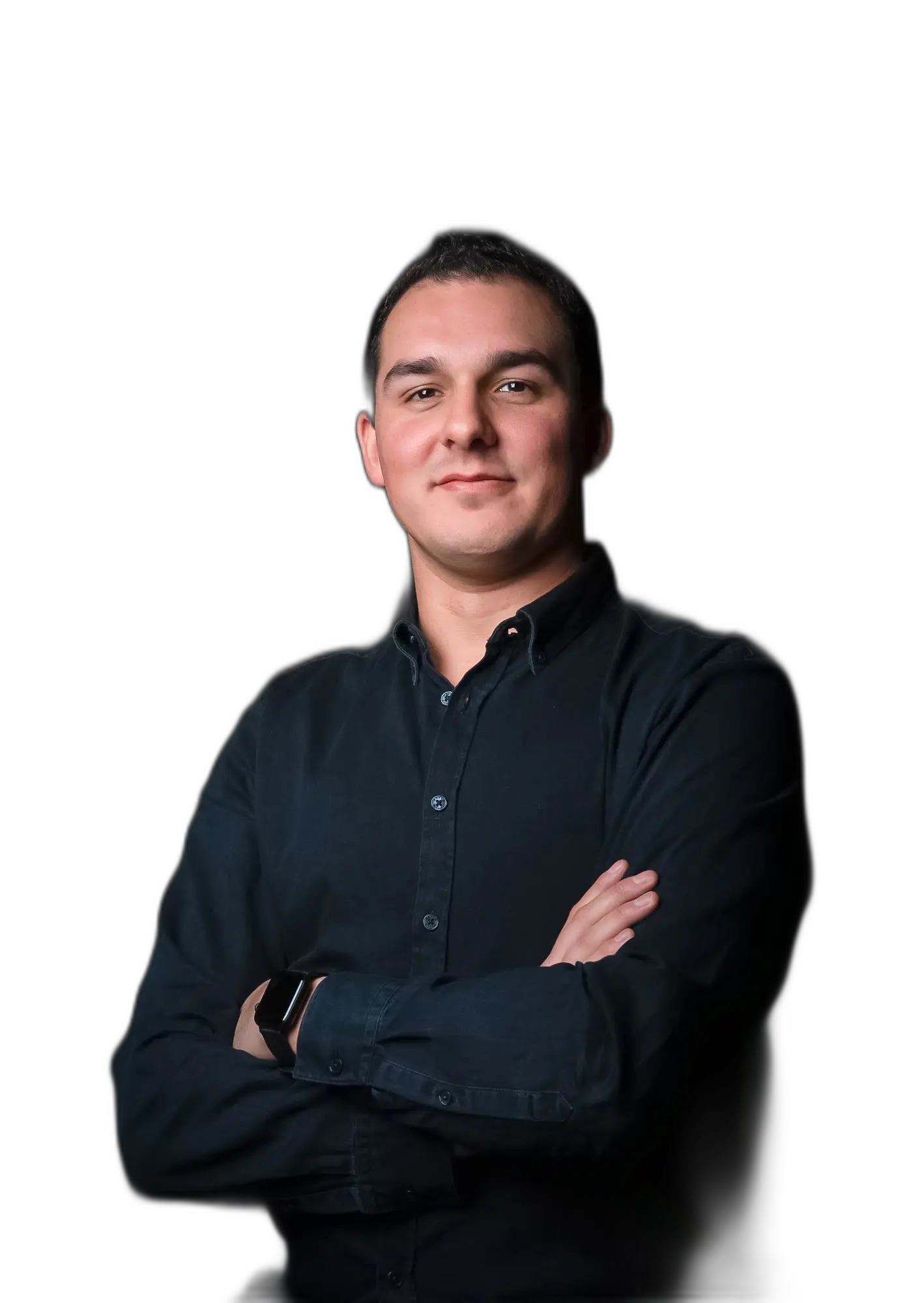
Eyal Gantz
EYAL_GANTZ · NODE_00
LARAVEL LARAVEL · core
AWS · infra
SHOPIFY SHOPIFY · commerce
CLAUDE CLAUDE · ai
VUE VUE · front
LIVEWIRE LIVEWIRE · tall
POSTGRES POSTGRES · data
TAILWIND TAILWIND · ui

Statement

For 22 years I’ve built the things businesses actually run on: storefronts, platforms, and the AI that quietly does the work. One operator, the whole stack, zero gaps.

Operating thesis Read the long version →

Selected Work

The Index

16 builds · 2003-2026
$150M+ in client revenue

  1. 01 Spot.io Cloud Platform · Acquired $450M 2015-2020
  2. 02 SeatServe Real-Time Platform Real-time Multi-year
  3. 03 Moses NYC Luxury Retail Blank-canvas Ongoing
  4. 04 Difference Coffee Luxury Shopify · Founder-led 100+ Ongoing
  5. 05 Tres Colori Fractional CTO · E-commerce 5+ yrs 5+ years
  6. 06 Morningside Naturals Shopify Engineering Structured data Ongoing
  7. 07 Handled Entertainment Content Studio · Brand Site 80 films Ongoing
  8. 08 Goodbye Inventory Live-Commerce Platform 130+ Ongoing
  9. 09 Salem Wine & Liquor AI & Automation 1000s Ongoing
  10. 10 ITStore B2B Platform · Re-platform EN · HE Multi-year
  11. 11 NYCMode Multi-Channel Commerce Real-time Multi-year
  12. 12 Gigi Ben Artzi Brand Site Years live 4 weeks
  13. 13 Noam Leather Design Brand Site · E-commerce Horizon 6 weeks
  14. 14 Coco Bungo Hospitality +65% 8 weeks
  15. 15 Ron Gabay Brand Site EN · HE 4 weeks
  16. 16 D. Gantz Projects Brand Site EN · HE 3 weeks
Selected builds Flagship work, in full

Spot.io · Cloud Platform · Acquired

01  /  Founding-team engineer

Spot.io

The cloud-cost platform NetApp acquired for $450M.

Founding-team engineer on Spot (formerly Spotinst). Built the real-time, multi-cloud dashboards and the AWS, Azure, and GCP API integrations that gave engineering teams a live view of their infrastructure spend: the data layer the continuous-optimization engine ran on.

$450M NetApp acquisition (NASDAQ: NTAP)
Founding team engineer
AWS · Azure · GCP real-time dashboards
JavaScript Cloud APIs (AWS, Azure, GCP) Real-time Dashboards REST

Difference Coffee · Luxury Shopify · Founder-led

02  /  Shopify design & engineering lead · ongoing

Difference Coffee

A bespoke storefront for the world's rarest coffee.

Difference Coffee sells the world's rarest coffees, single estates and competition lots, as Nespresso-compatible capsules poured in over 100 Michelin-starred restaurants. I design and build their Shopify storefront hand in hand with founder Amir: a warm, editorial theme in serif type and gold accents, assembled from custom sections and refined round after round into a storefront as considered as the packaging.

100+ Michelin-starred restaurants pour it
Bespoke custom Shopify sections, no template
Staging-first zero-downtime theme deploys
Shopify Online Store 2.0 Liquid Custom Sections & Blocks CSS Design Tokens JavaScript Shopify CLI

Tres Colori · Fractional CTO · E-commerce

03  /  Fractional CTO · ~5 yrs

Tres Colori

The storefront you see, and the order-ops machine behind it.

Personalized-jewelry brand whose customers design their own name necklaces, rings, and bracelets. As fractional CTO I own both halves of the engine: the custom Shopify storefront shoppers personalize on, and trescolori.cloud, the Laravel platform that turns each order into a manufactured, shipped, and tracked piece.

5+ yrs fractional CTO ownership
End-to-end storefront → manufacture → ship
2026 re-platformed to Laravel Cloud
Shopify Online Store 2.0 Liquid Laravel 12 Laravel Cloud PostgreSQL ShipStation Klaviyo

Handled Entertainment · Content Studio · Brand Site

04  /  Designer & developer

Handled Entertainment

A portfolio built like the work: impossible to scroll past.

Handled Entertainment is a New York content studio shooting vertical-first films for brands like Shake Shack, Grubhub, Walmart, and Bobby Flay. I designed and built their new home from scratch: a dense wall of autoplaying reels on desktop, and "The Projection Room" on mobile, a full-screen snap feed that presents the studio's films the way they're meant to be watched.

80 films in the catalogue, lazy-streamed
Wix → Laravel migration, legacy 301s intact
9:16 "Projection Room" mobile feed
Laravel 12 GSAP + ScrollTrigger Lenis Tailwind CSS ffmpeg video pipeline JSON-LD / GEO Laravel Vapor

Goodbye Inventory · Live-Commerce Platform

05  /  Fractional CTO / Lead Engineer · ongoing

Goodbye Inventory

Built for resellers who refuse to compromise.

A premium beauty-wholesale platform for resellers. It marries a polished Shopify storefront with a custom Laravel backend so any-lot-size buying, live-auction drops, and monthly subscription boxes all run on one coherent system. I led the full build: storefront, reseller purchasing rules, the inventory engine, and the live-shopping experience.

130+ premium beauty brands carried
Live daily auction commerce
Hybrid Shopify + custom Laravel
Shopify Laravel Laravel Cloud Shopify GraphQL API Webhooks Tailwind CSS Alpine.js

Salem Wine & Liquor · AI & Automation

06  /  AI & automation engineer · ongoing

Salem Wine & Liquor

Six decades of wine expertise, now with an AI catalog engine.

A family-owned fine wine and spirits shop serving South Salem, NY since 1966. To bring that expertise online, I built a behind-the-scenes AI system on their Square storefront: it writes accurate product descriptions, sources bottle imagery, and organizes thousands of wines and spirits into a clean, browsable catalog, backed by pricing intelligence and inventory automation.

1000s SKUs auto-enriched
AI descriptions · imagery · categories
Est. 1966 South Salem, NY
Laravel Square Catalog API LLM Enrichment (Claude) AI Image Sourcing Cloudflare Workers Queues

In Their Words

The custom order management system they built for us is a game-changer. We track every custom piece from order to delivery, and our customers love the real-time updates.
Founder · Tres Colori
Finally, we can see exactly what we have in stock across all our locations. The system pays for itself every month in prevented overselling and faster fulfillment.
Store Manager · NYCMode
Our new website captures the magic of Coco Bungo perfectly. More importantly, guests now book directly with us, which has significantly improved our margins.
Owner · Coco Bungo Resort

About

One operator. The whole stack.

I’m Eyal, an Internet Maker. For 22 years I’ve designed, built, and shipped digital products end to end: the storefront and the backend, the cloud it runs on, and increasingly the AI that does the quiet work behind it.

I’ve been a founding-team engineer on a platform NetApp acquired for $450M, and a fractional CTO who owns a brand’s entire technology stack for years. Most of my clients hire one person and get a whole team’s worth of range: design, code, infrastructure, and judgment.

Based
New York, NY
Building since
2003
Studio
wilco.web
Off the clock
snowboarding · electronic sets as bigs.

Tools of the trade

  • Laravel
  • PHP
  • Livewire
  • Vue / Alpine
  • Tailwind
  • Shopify
  • AWS / Vapor
  • Laravel Cloud
  • PostgreSQL / MySQL
  • Redis
  • Claude / OpenAI
  • Make.com

The Offer

Three ways to work with me

01 Project

Build With Me

From idea to revenue. I design, build, and ship the whole product: custom apps, online stores, AI systems, and the infrastructure to run them.

  • Full-stack, end to end
  • AI built in, not bolted on
  • Ships to production
Start a build
02 Retainer

Fractional CTO

I own your technology like a partner, not a vendor (architecture, hiring calls, infrastructure, and the roadmap) for a fraction of a full-time hire.

  • Own the whole stack
  • Vendor-free decisions
  • Years, not weeks
Talk fractional
03 Mentorship

1:1 Coaching

Level up with someone who has shipped 100+ products. Architecture reviews, career direction, and the hard-won shortcuts, one developer at a time.

  • Real code, real reviews
  • Architecture & career
  • Shortcuts from 22 yrs
Learn with me

Questions

FAQ

I build entire digital products end to end: custom web applications, online stores, AI automation, and the cloud infrastructure that runs them. One person covers the full stack that usually takes a team. In practice that means I design the product, write the code (Laravel, Livewire, Vue, Shopify), set up the infrastructure (AWS or Laravel Cloud), wire in AI where it earns its place, and keep everything running after launch. Clients bring me an idea, a struggling codebase, or a store that needs to grow, and I take it from there. Over 22 years I have shipped more than 100 products this way, from marketing sites to multi-tenant platforms that process real revenue. The point of the model is accountability: there is no handoff between designer, developer, and DevOps, because they are the same person. You talk directly to the person who writes the code.

Project pricing depends on scope, and I quote it as a fixed number, not an hourly meter. As a working range: simple marketing sites start around $10K, custom web applications usually land between $25K and $50K, and larger platform builds run $50K to $100K and up. Fractional CTO engagements are monthly retainers scoped to what your business actually needs, at a fraction of the cost of a full-time hire. Every engagement starts with a discovery call where we scope the work; you get a written proposal with a fixed price and a realistic timeline before anything begins. No surprise invoices and no change-order games: if the scope genuinely changes, we re-scope it together in writing. The fixed-price model keeps the incentive where it belongs, on shipping a working product, not on stretching the hours until the budget runs out.

Most projects run 4 to 12 weeks from kickoff to production. A focused MVP can ship in 3 to 4 weeks, an e-commerce build with catalog work and integrations typically takes 6 to 10, and a larger platform with multiple systems involved can run a quarter or more. Two things keep my timelines honest. First, I work in focused sprints with something reviewable at the end of every week, so you see real progress instead of status reports. Second, there is no coordination overhead: no agency queue, no handoffs between departments, no waiting on another team's sprint to end. The estimate I give you up front is one I have hit many times before, and if anything threatens it (a third-party API, a scope change, a surprise mid-build discovery), you hear about it the day I find out, not at the deadline.

Yes. For several clients I own the whole technology stack on an ongoing retainer: architecture, infrastructure, vendor decisions, security, and the roadmap, the way a technical partner would. The model fits businesses that need senior technical ownership but cannot justify, or simply do not want, a full-time executive hire at $250K+ a year. In practice a fractional engagement looks like this: I audit what you have, fix what is fragile, set a roadmap tied to actual business goals, and then run the technical side month to month, shipping improvements myself rather than just advising from a slide deck. Because I still write code every day, the strategy stays grounded in what is actually buildable. Current fractional clients range from e-commerce brands to service businesses across the US and Israel. If you already have developers, I lead them; if you do not, I build it myself.

One senior builder, zero handoffs. An agency sells you a team: an account manager who relays messages, a project manager who schedules them, and a rotating cast of developers you never meet. Every layer adds cost, delay, and translation loss. With me, the person on the discovery call is the same person who designs the product, writes the code, configures the infrastructure, and picks up the phone when something breaks. That is not a scale limitation; it is the product. Twenty-two years in, I move faster alone than most five-person teams because nothing waits in a queue and nothing gets explained twice. The trade-off is honest: I keep a limited number of engagements at once, and I say no when the fit is wrong. If your project genuinely needs a fifty-person organization, I will tell you that on day one and point you to one.

My core stack is Laravel on the backend with Livewire or Vue on the frontend, Tailwind for UI, Shopify (including Shopify Plus) for commerce, and AWS or Laravel Cloud for infrastructure, with Postgres, MySQL, and Redis underneath. For AI work I build with Claude and OpenAI: agents, retrieval pipelines, and workflow automation with tools like n8n where they fit. I choose boring, durable technology on purpose. A stack like this has a decade-plus track record, a deep hiring pool, and predictable operating costs, which matters more to a business than whatever framework is trending this quarter. That said, I have shipped React, Three.js, WordPress rescues, and plenty of legacy systems; the tool follows the problem, not the other way around. If you ever inherit my code, any competent Laravel developer can pick it up without a decoder ring.

I am based in New York City and work remote-first with clients across the United States and Israel, in both English and Hebrew. Most engagements run entirely remote: async updates, short focused calls, and demos of working software instead of slide decks. Time zones are rarely a problem; I have run projects with US teams by day and Israeli teams by evening for years. For clients in the New York area I am happy to meet in person for kickoffs, architecture workshops, or a working session when a whiteboard genuinely beats a screen share. The bilingual part is more useful than it sounds: I have built and shipped fully bilingual English-Hebrew products, right-to-left layouts included, and can work directly with Israeli vendors, teams, and stakeholders without anything getting lost in translation on either side of the ocean.

Yes, and I have the receipts: I was a founding-team engineer on Spot, which NetApp acquired for $450M, and I have taken other startups from napkin sketch to production. Startup work has its own physics: the budget is finite, the direction changes, and speed matters more than polish in the right places. So I build MVPs that are deliberately small but structurally sound, meaning the version that finds product-market fit does not have to be thrown away and rebuilt. For very early founders I also do short advisory engagements: pressure-testing the technical plan, sizing the build, and helping you avoid the expensive mistake of building the wrong thing well. If you are pre-funding, say so up front; I would rather point you at a scrappier path today and work together when the timing is actually right.

You do. Everything I build lives in accounts you own: your GitHub repository, your AWS or Laravel Cloud account, your Shopify store, your domain registrar. I work inside them rather than holding anything in mine, so when an engagement ends there is no hostage negotiation, because you were holding the keys the whole time. The code itself is written to be inherited: conventional Laravel, tests, and documentation, so any competent developer can take over without me in the room. There is no lock-in by obscurity either: no proprietary framework, no undocumented magic, no tooling only I can run. Clients stay for years because the work keeps earning its place, not because leaving is painful. If you have been burned by an agency that owned your repo, your hosting, and effectively your business, this is deliberately the opposite model.

Launch is the midpoint, not the finish line. Every project includes a stabilization window after go-live where I monitor production, fix what surfaces, and tune performance against real traffic instead of assumptions. After that, most clients keep a monthly retainer covering monitoring, security patches, dependency updates, verified backups, and a block of hours for improvements, so the product keeps compounding instead of quietly rotting. Some clients prefer to come back project by project; that works too, and the codebase is documented so nothing depends on my memory. What I do not do is disappear after the final invoice clears. Several of my longest engagements, including ones you can read in the case studies, started as a single build and turned into multi-year technical partnerships, because the cheapest feature you will ever ship is the one added to a healthy, maintained codebase.

Send a short note through the contact form, or book a discovery call directly. Tell me what you are building, where it stands today, and the timeline you have in mind; two or three honest paragraphs beat a formal brief. On the call we dig into scope, constraints, and whether we are actually a fit. Shortly after, you get a written proposal with a fixed price and a realistic schedule, or a straight "this is not for me" with a pointer to someone better suited for it. I keep a limited number of engagements running at once, on purpose, so lead time depends on the current queue. There is no cost and no obligation to the conversation, and you will know quickly whether this is the right direction; I do not run slow-fade sales processes, and I do not chase.

Commission

Let’s build
something real.

Tell me what you’re building and roughly when. If it’s a fit, you get one operator who covers the whole stack. If it isn’t, I’ll point you somewhere better.

Project enquiry · No. 26